
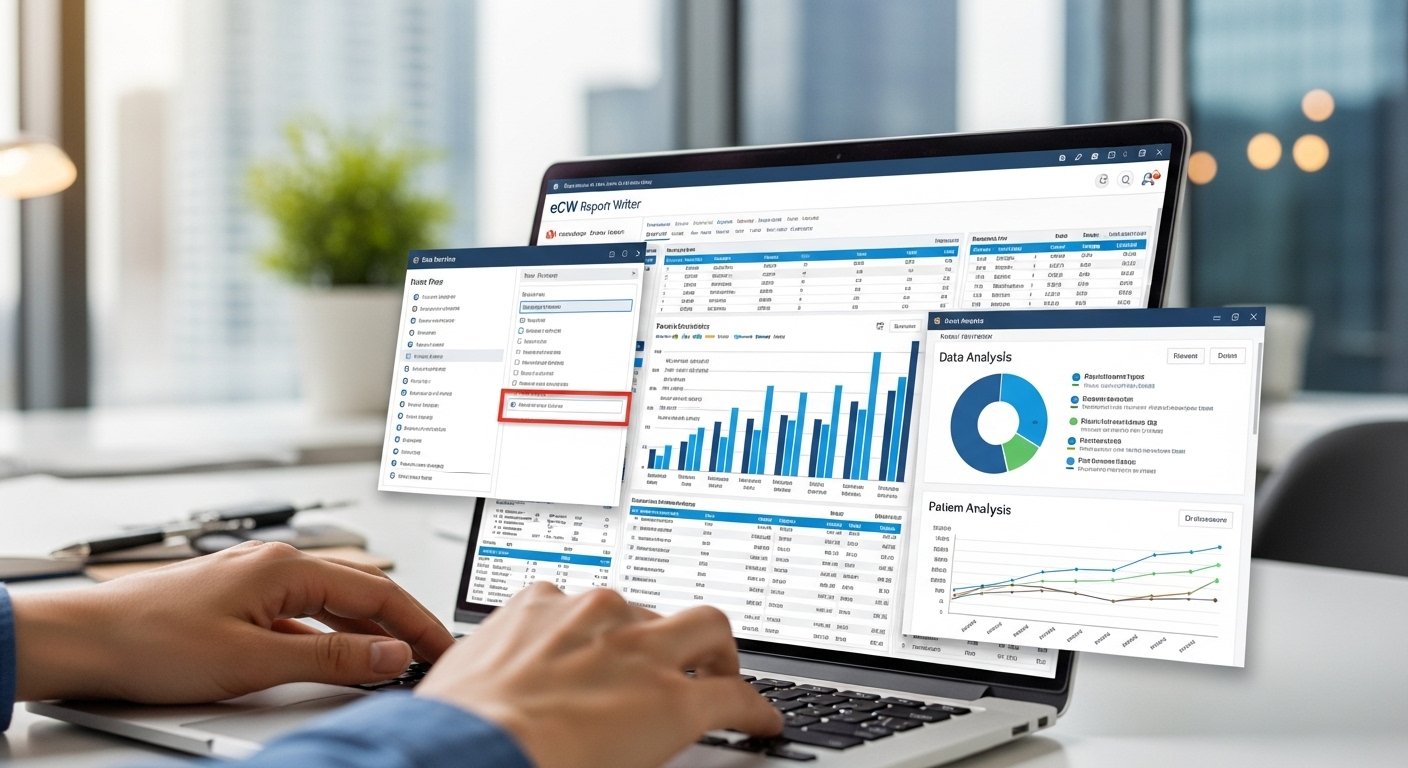
Medical practices may use an eClinicalWorks (eCW) report writer service to design, configure, and manage reports that align with how data is stored within the eClinicalWorks environment. With eClinicalWorks, standard reporting tools provide access to major metrics, and using the services of an eCW report tool provides deeper access to structured data and customizable reporting outputs. Here is how to leverage the advanced features of an eCW report writer for data analysis:
eCW Reporting Structures
Using an eCW report writer allows you to query the databases to extract specific data elements based on the defined requirements. It allows the writers to develop custom reporting using structured query language. This approach supports the creation of datasets that reflect billing data, clinical activity, operational metrics, and scheduling information as they exist in the system. By using a custom approach, these professionals build reports that are structured around workflows and reporting needs; they do not rely on standards and prebuilt reports alone. SQL-based reporting also allows data to be combined across multiple tables where appropriate. This produces outputs that align with administrative analysis, operational monitoring, and internal reviews.
Predictive Data Analysis
Using predictive data analysis allows you to get trend-based analytics that compare data across defined periods. The writers examine historical data to identify patterns, changes, and performance movements; they provide reports that depict utilization rates and variations in operational activity. By maintaining uniform query logic parameters, these professionals conduct longitudinal comparisons in the same datasets. The resulting structured outputs allow you to observe trends and measure changes using internal criteria.
When performing the trend analysis, eCW reports compare datasets across locations, departments, dates, and providers. Organizing this information chronologically allows you to identify patterns in the datasets. Some of the common datasets include billing activities, patient visits, and workflow-related metrics. Outputs provide a factual view of historical performance without altering or interpreting the data beyond its recorded values.
By using the existing eCW data structures and reporting tools, the writers can produce analyses based on factual data instead of external assumptions. The approach supports ongoing monitoring and replicable analysis; it enables regular reports to be generated using the same underlying logic. This allows you to track performance movement over time using data that remains consistent with how eCW captures information.
Operational and Compliance Reporting
eCW reporting services align with operational and administrative requirements. The professionals develop reports that support operations in various areas; this includes revenue cycle monitoring, compliance-related tracking, and practice performance. By utilizing this service, you can get outputs that respond to your organizational and regulatory reporting needs.
The writers also use reports to support quality measures, administrative compliance needs, and documentation review. They can generate reports that align with your internal audit or external reporting requirements, and they do this by extracting data that meets the regulatory standards. This process provides reported information that is traceable to its original source within eCW.
Explore eCW Report Writer Services
eCW report writers play a central role in transforming system-recorded data into organized reports that support internal planning, operational oversight, and compliance tracking. By leveraging eCW reporting tools and databases, you can gain clear visibility into trends and administrative records, and you are able to do this without altering source data. This approach can help you develop reporting outputs that are consistent and aligned with documented system activities. Explore how an eCW report tool can help you work more effectively.
Add a Comment